
How PACE Auto Group's SA Motor Lease Automated Rent-to-Buy Intake

Case Overview
If you run a vehicle leasing or rent-to-buy operation, you know what happens after a customer gets pre-approved on your website. The application isn’t done. It’s barely started. Someone still has to collect the rest: where do you live, what’s your take-home salary, are you employed, where, doing what. Send your ID. Send your licence. Send three months of bank statements. Every answer arrives when the customer feels like sending it. Every document arrives as a blurry photo, a screenshot, a PDF, or the wrong thing entirely. Someone opens each one, checks the name matches, checks it hasn’t expired, then switches tabs and types it all into the CRM. Then the customer goes quiet, and someone has to remember to chase them. Tomorrow. And the day after.
SA Motor Lease had already tried to automate this with rigid click-through WhatsApp flows. They worked as long as the customer behaved exactly the way the flow expected. The moment someone answered two questions in one message, uploaded a document before being asked, sent one PDF instead of three, asked whether they qualify in Durban, or disappeared for a day and came back mid-sentence, the flow broke and a person had to step back in. At 3,000 pre-approved leads a month, with nearly half of them messaging in the evening or on the weekend, “a person steps back in” is a full team’s workload and a Monday-morning backlog of leads that have already gone cold.
We built SA Motor Lease an AI WhatsApp assistant that takes over the moment a lead leaves Odoo, their CRM, and runs the application through to a compliance-ready file. It holds a natural conversation rather than a scripted one: it extracts answers whenever and however the customer gives them, asks for the next missing item, reads and validates every uploaded document with vision, answers questions about SA Motor Lease from the company’s own material, follows up on its own when the customer goes silent, syncs every field back into Odoo as it’s collected, and hands the completed application to the compliance team.
Across July and August 2026, the system handled roughly 3,000 leads and 15,000 messages a month, completed around 500 applications a month with a median of 36 minutes from lead to done, vision-checked around 900 documents, pushed thousands of updates into Odoo, and escalated to a human roughly once. Not once a day. Once a month.
Company Background
PACE Auto Group is one of South Africa’s largest privately owned automotive groups. Founded in 2007 by Grenville Salmon with a single borrowed car, the group has grown into a national mobility business with a fleet of more than 5,000 vehicles valued at over R1 billion, 300+ employees, and branches across Johannesburg, Pretoria, Cape Town, Durban, Gqeberha and East London. Its divisions span car and commercial vehicle rental, fleet services, rent-to-buy, vehicle sales, panel repair and armoured vehicles.
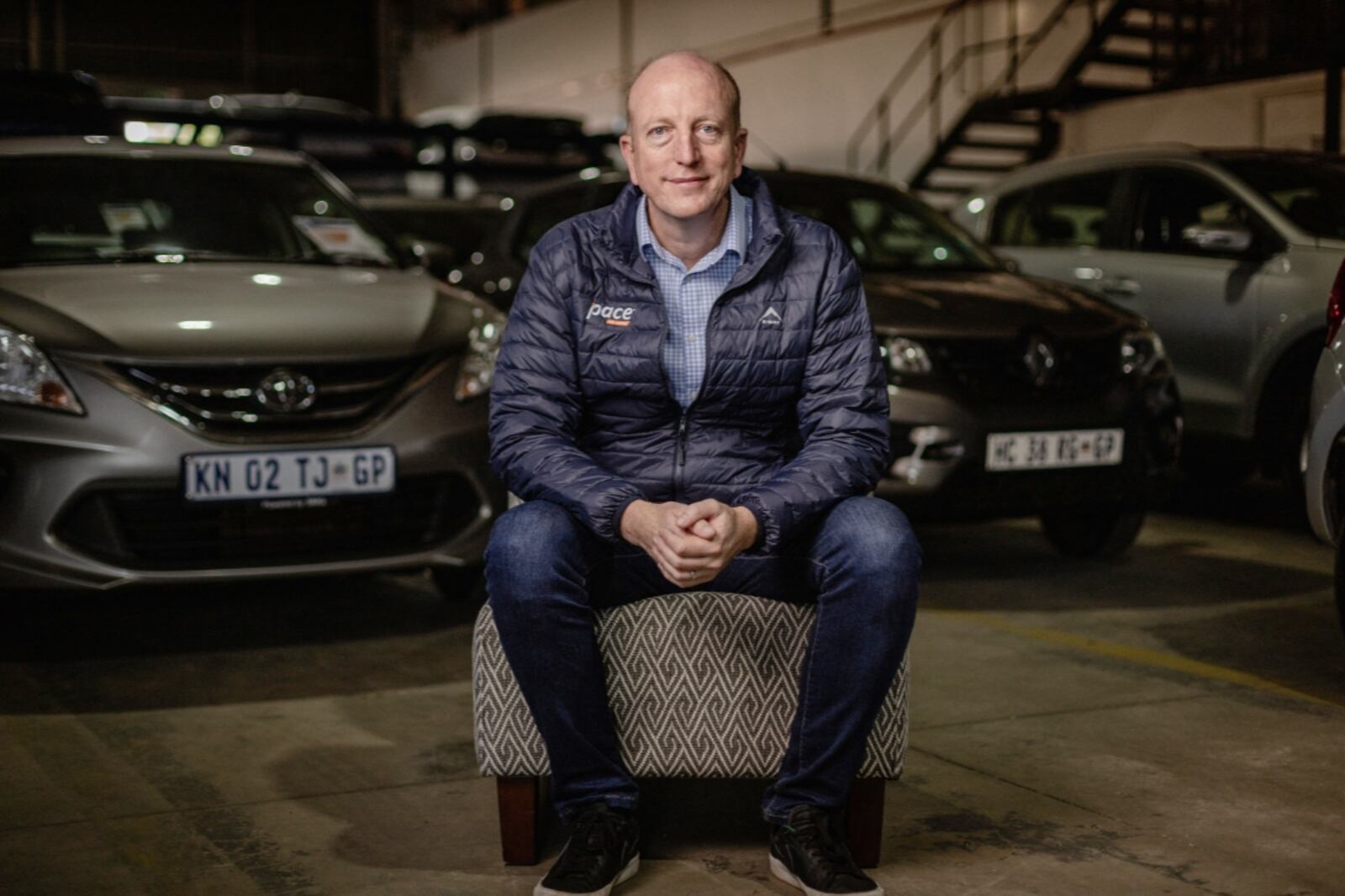
SA Motor Lease is the group’s rent-to-buy division. It leases vehicles to individuals and businesses on fixed monthly terms with an option to own the car at the end, including customers that traditional bank finance turns away. Every pre-approved lead is a customer actively trying to get into a vehicle, and the business is digital-first: pre-approval happens online, and the full application happens over WhatsApp. At thousands of leads a month, how fast and how completely that WhatsApp application gets finished directly determines how many cars leave the yard.

The Challenge
Every pre-approved lead needed a human to run a ten-field, three-document application over WhatsApp, one message at a time, during office hours, with no system tracking who had been chased and who hadn’t. The volume was there. The team’s hours were the bottleneck, and the rigid flows built to relieve them broke on every customer who didn’t follow the script.
Our Strategic Approach
We didn’t set out to build a better chatbot. We set out to build an application operator: a system that knows the state of each application, knows exactly what’s still missing, and takes the right next action without forcing the customer through a conversational tree. That meant designing everything around the state of the application, not around which button the customer clicked.
Phase 1: Encode the Application, Not the Script
We sat with the SA Motor Lease team and extracted the exact application: every required field (name, service area, net take-home salary, home address, employment status, employer, occupation, driver’s licence, ID or passport, three months of bank statements), every optional one, and every business rule. Service area must be Cape Town, Johannesburg, Durban, Pretoria or Port Elizabeth. Net salary must clear ZAR 17,000. Three months of bank statements can arrive as one PDF or three separate files, and both count. That became a five-stage flow (greeting, pre-qualification, application details, document intake, settlement) where progress is driven by which fields are actually filled, not by how many turns the conversation has taken.
Phase 2: Start From What the Business Already Knows
Every journey begins inside Odoo. When a lead is ready, Odoo pushes the customer’s details and anything already submitted on the website into the system. The assistant never asks for something SA Motor Lease already has.
Phase 3: One Agent That Handles the Whole Conversation
Instead of chaining separate bots for intent, extraction and classification, a single AI agent reads each customer message, plus any attached images or PDFs, and handles all of it in one pass. It extracts any application data present, even if it wasn’t asked for yet. It asks for the next missing item, one at a time, politely. It handles small talk and steers back. It answers questions about SA Motor Lease from a retrieval knowledge base built from the company’s own PDFs, then brings the customer straight back to the application. It reports progress when someone asks “what’s still missing?” It escalates when a customer asks for a person. Messages sent in quick bursts are buffered and answered once, as a whole, so it feels like talking to someone who’s actually reading.
Phase 4: Documents Read by Vision, Not by Eye
Every uploaded file is checked the moment it lands: what type of document it is, whether it’s readable, whether it’s expired, whether the name matches the applicant. Valid documents are stored against the right requirement. Bad ones get a polite, specific request to resend. Nobody on the team opens an attachment the AI hasn’t already validated.
Phase 5: Keep the CRM Current, Always
As fields are collected they’re synced into Odoo in near real time. Over two months that was more than 7,000 field updates with a single failure. When the application is complete, the session locks, the CRM is notified, and further edits are routed to the compliance team. The conversation never happens in one system while the customer record goes stale in another.
Phase 6: Follow Up Without Anyone Remembering To
After every reply the system schedules the next reminder and cancels the previous one. If the customer goes quiet, a stage-specific WhatsApp nudge goes out, then another. If they stay silent, the lead is flagged as stalled for a human. In practice most reminders never fire, because the customer replies first. That’s the point: they exist for the ones who don’t.
Phase 7: Built to Run at Volume, Cheaply
A FastAPI front door validates and enqueues; Celery workers do all AI, database and messaging work across four Redis queues; Supabase Postgres holds leads, sessions, messages and the vector knowledge base; the whole thing deploys to Railway as three services. Prompts are structured so Azure OpenAI’s prompt caching applies on every turn, conversation context is chained and periodically summarised, and every call logs token counts and cost. This is what lets 15,000 messages a month run without the AI bill becoming the new bottleneck.

Solution: The SA Motor Lease WhatsApp Assistant
A customer gets pre-approved. Odoo passes the lead to the system. From there, the assistant:
- Greets the customer on WhatsApp
- Starts from what SA Motor Lease already knows
- Collects the remaining application information, in whatever order it arrives
- Answers customer questions from the company knowledge base
- Receives and validates documents with vision
- Follows up automatically if the customer goes quiet
- Updates application data in Odoo as it goes
- Completes the application, or escalates when a human is actually needed
For the applicant there’s no app to learn, no portal, no form. It’s just WhatsApp. Behind that conversation is a system maintaining the application state, document requirements, CRM record, business rules, follow-up schedule and conversation history for thousands of customers at once.
Results After Launch
This is real operational data, averaged across July and August 2026.
~3,000 pre-approved leads a month, every one picked up automatically. Around 3,500 conversation sessions and 3,100 unique customers a month. No lead waits for the next available agent.
~15,000 WhatsApp messages a month, ~500 a day. Roughly 7,300 inbound customer messages and 8,100 AI replies per month. These aren’t canned responses attached to buttons. Each one is read, understood, and answered in the context of that customer’s application.
~500 completed applications a month. Of the customers who engage, 30% go all the way to a complete, compliance-ready file with every field filled and every document validated. Around 16 messages per completed application, start to finish.
36 minutes, median, from lead to completed application. Half of all completed applications are done within about half an hour of the lead entering the system, inside a single WhatsApp conversation. The old process stretched across repeated manual interactions and depended on two people being free at the same time.
~900 documents a month checked by vision. IDs, licences and bank statements from around 600 customers a month, each classified, checked for readability, expiry and name match, and stored against the right requirement. Staff review nothing the AI hasn’t already validated.
~4,500 application fields extracted and ~3,500 synced to Odoo every month. More than 7,000 CRM updates over two months with one failure. Addresses, employment details, employer, document status: the CRM is always current, and nobody retypes WhatsApp answers into a form.
~1 human escalation a month. Two in August, zero in July. The goal was never to stop customers reaching a person. It was to stop employees being pulled into interactions that didn’t need them. When someone does ask for a human, it happens immediately.
45% of customer activity happens outside office hours. Nearly half of all inbound messages arrive outside 8 to 5 Monday to Friday, 15% on weekends. A customer applying at 11pm on a Saturday gets the same experience as one applying at 11am on a Tuesday, instead of joining Monday’s backlog.
Follow-up handled ~5,500 times a month without anyone remembering to. Around 1,100 reminders sent, and around 4,400 scheduled reminders cancelled because the customer replied before they were needed. Either way, no lead sits untouched.
200+ hours of repetitive work removed every month. At this scale the value isn’t one impressive AI interaction. It’s thousands of small tasks disappearing. Before: open WhatsApp, read the message, check the application, work out what’s missing, reply, open the document, check it, open Odoo, update the field, remember to follow up, repeat. Now: 8,100 replies nobody writes, 900 documents nobody opens, 3,500 CRM fields nobody types, 1,000+ follow-ups nobody schedules. At conservative per-task timings that’s over 200 hours a month, more than 2,400 hours a year, and unlike another operations hire, it doesn’t stop answering at 17:00.
The team works on decisions, not data entry. Operations and compliance receive completed applications, stalled-lead flags, and the rare escalation. The chasing, the squinting at photos, the copy-paste into Odoo: gone.
Client Perspective
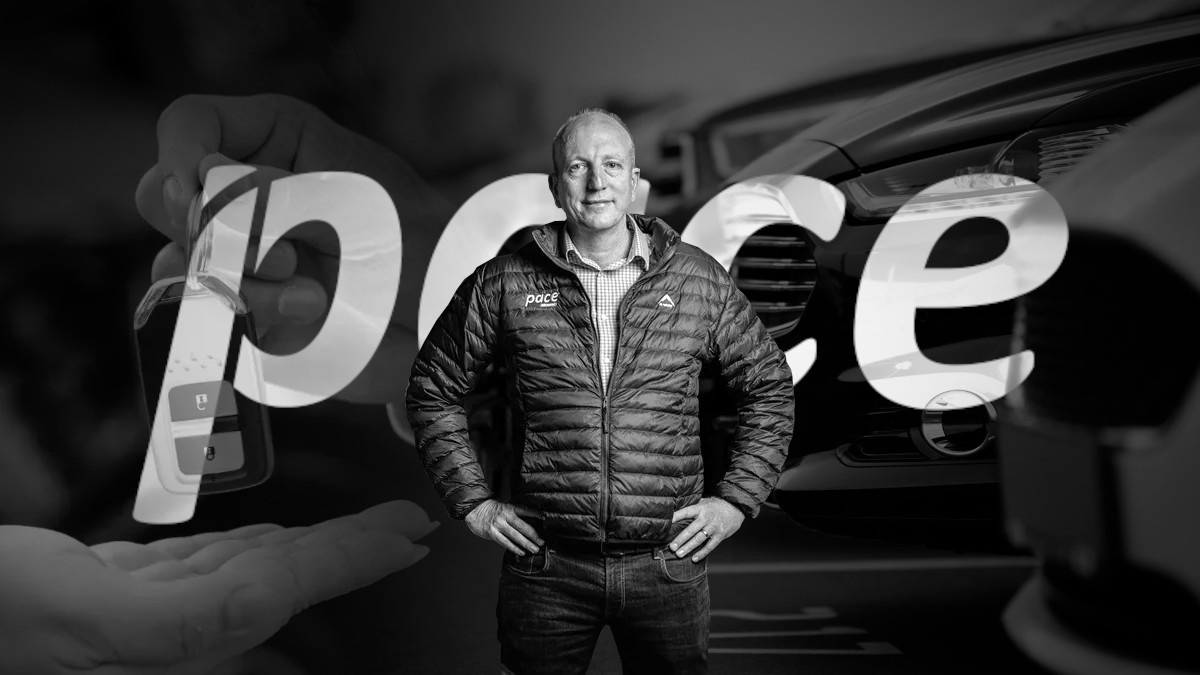
We had tried the scripted WhatsApp flows, and they broke the moment a customer did anything a real person does. What Commerit built actually runs the application. It collects what’s missing, reads the documents, keeps Odoo current and chases the ones who go quiet, at eleven on a Saturday night as well as on a Tuesday morning. Our people now deal with completed files and the odd exception, not three thousand conversations a month.
Grenville Salmon, Founder, PACE Auto Group
Takeaway
There’s a big difference between putting a chatbot on WhatsApp and automating an operation. A chatbot answers messages. An operational AI system knows where each customer is in a business process, knows what’s already happened, decides what should happen next, and updates the systems the company actually runs on.
Every leasing, lending and financing business that sells through WhatsApp has the same problem. The channel converts, so customers flood in. But every application still needs a human to run it one message at a time, read every document by eye, retype everything into the CRM, and chase the ones who go quiet. Rigid flows don’t fix it, because customers don’t follow flows. It scales with headcount, it stops at 5pm, and Saturday-night leads are cold by Monday.
For SA Motor Lease, the fix means roughly 3,000 leads and 15,000 messages a month, 500 completed applications, a 36-minute median from lead to done, 900 documents checked automatically, and one human escalation a month, running inside one of South Africa’s largest automotive groups without a customer ever leaving WhatsApp.
For PACE Auto Group, it shows something broader: AI doesn’t have to replace a department to create real enterprise value. Sometimes the opportunity is to find the process where the team is clicking, copying, checking, replying and chasing the same things thousands of times a month, and remove the work.
If your team is running applications over WhatsApp by hand, if half your leads message you when nobody’s there to answer, or if documents and CRM entry are eating hours you’d rather spend closing, this is what solving that looks like.
-(3).png)
-(1080-x-1080-px)-(2).png)
.png)
-(1080-x-1080-px).jpg)
Unlock the power of AI to transform your business today!
Experience seamless automation with our cutting-edge technology. From customer support to sales, we empower your team to focus on what truly matters.


Industry Leaders